
Earth/Space Science in the Spring semester, with MR. CLARK
email: bclark@petk12.org
Week of January 05 (first week of school!)
Learning Objectives for the week
- The surface of the Earth moves around through Plate Tectonics.
- This has been happening for billions of years and the Earth’s surface has drastically reshaped itself continously.
New Assignment:
- Youtube Video: Orogeny of of North America: 600 million years ago to present.
- Students are to watch the video sequence and with their table partner, respond to the following questions. (note: One sheet of paper with two names on it per table).
- What is this video showing?
- Why is this happening?
- Draw a series of at least three sketches showing how North America has changed through time (identify how many millions of years ago each sketch depicts).
- Describe how California formed.
- Spring Semester_new beginnings
Clark was out on the First day of the semester: Students received back all of their submitted work from the previous semester including their Fall semester Final Exams. On this first day, students were instructed to watch the YouTube video: Orogeny of North America, which is a time lapse of continental drifting through the ages and to respond to the associated worksheet (see link at left). When Clark returned to the classroom, we discussed New’s Years resolutions, to become better students. Along with this discussion was the activity (at left) having students reflect on the Review guide Clark passed out prior to the test and the actual test itself. This highlighted both the fact that the test came directly from the Review Guide as well as the fact that ‘cramming’ for the test by using ChatGTP to ‘look up’ all of the answers on the review guide is no substitute for engaging with the class activities and discussions along the way.
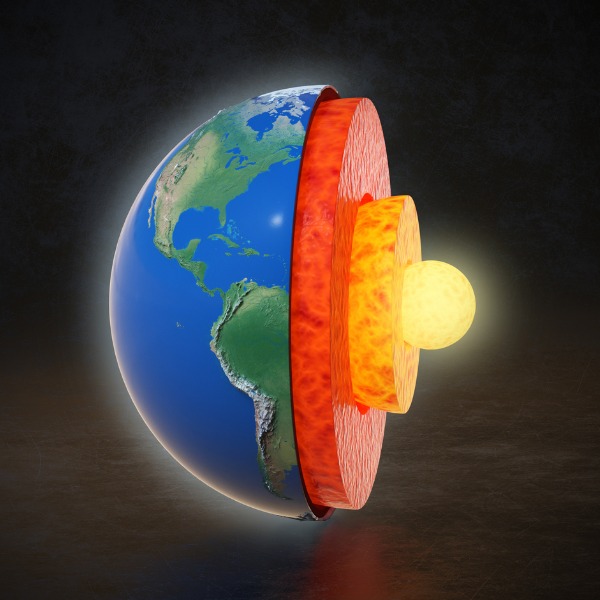
The Earth has several layers which originally formed while the Earth was cooling, but also play a role in dissipating the heat emitted by the Core of the Earth
Week of Jan. 12, 2026
Learning Objectives for the week
- Rock Cycle (overview)
- Earth’s internal heat as the primary source for plate tectonics
- Layers of the Earth and how they work to distribute heat from the interior to the exterior.
- Igneous Rocks as a ‘starting place’ to the Rock Cycle. The slower the cooling (the deeper the magma) the larger the crystals.
New Assignments this week.
- Notes: Rock cycle part 1_earths internal heat_student handout
- Video: Voyage of the Continents: The Formation of North America (Note: This episode is available on Amazon Prime)
- Piles of rocks_english Piles of rocks_spanish
- Notes: Rock cycle part 2_igneous rocks and crystal formation_student handout
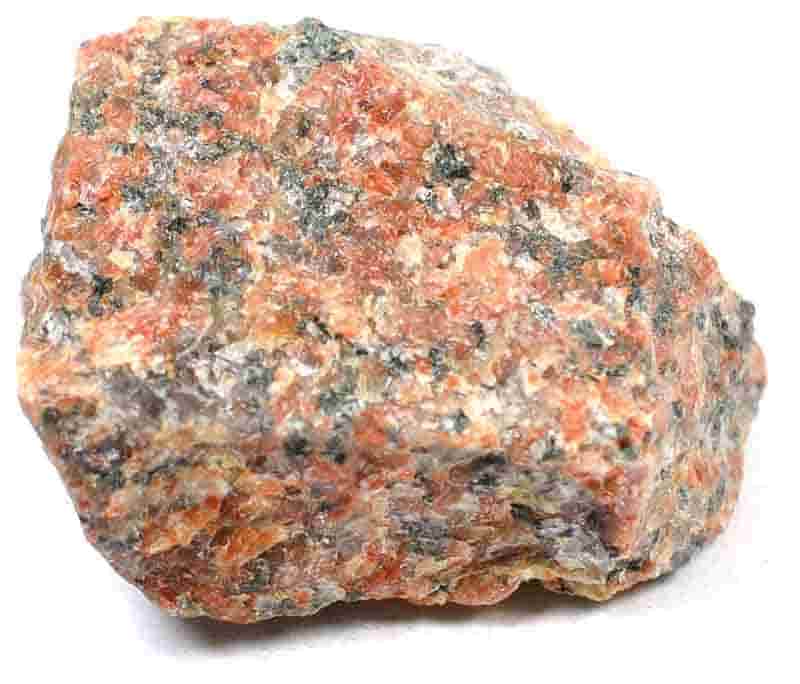
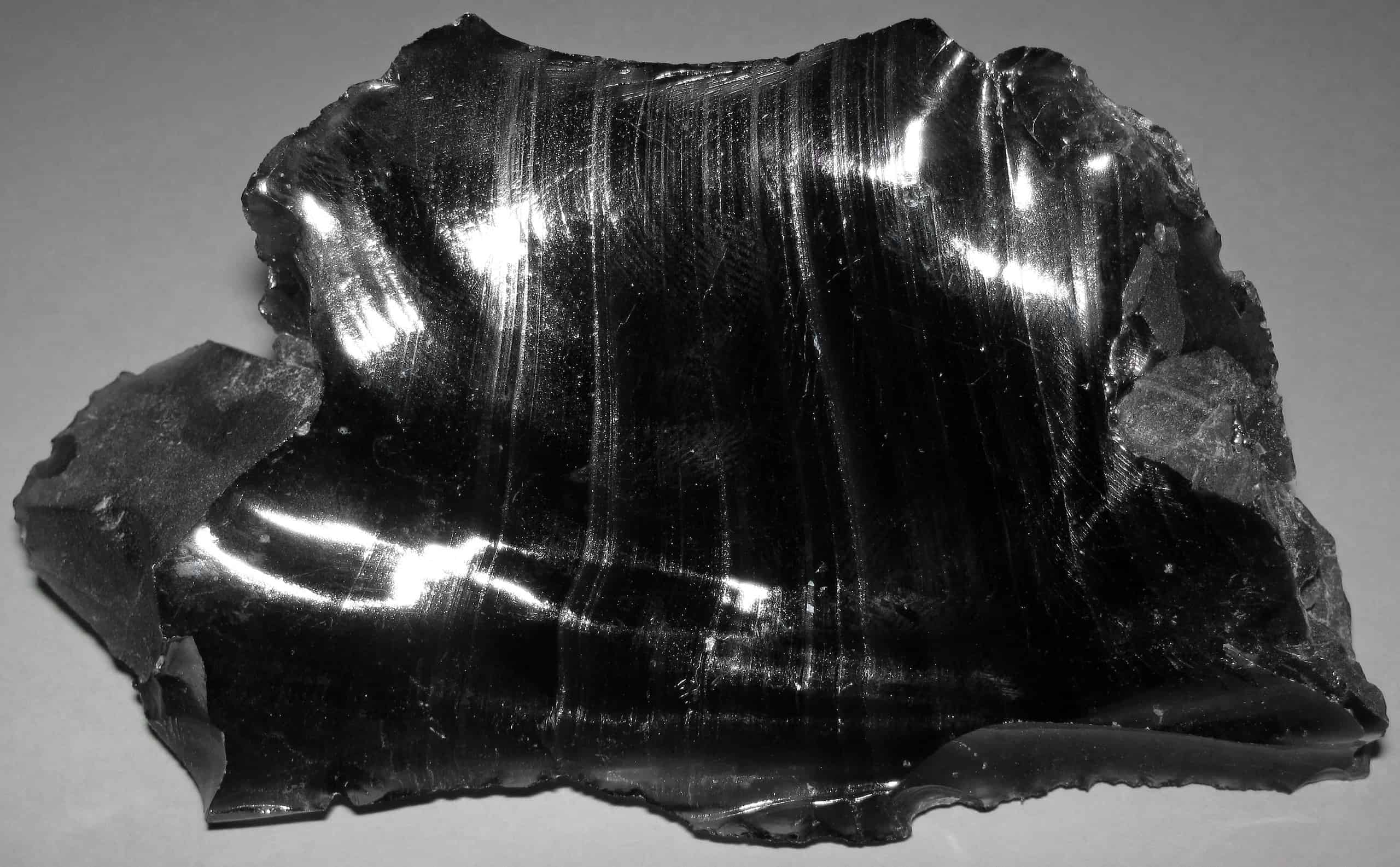
This week began with a .ppt lecture on the structure of the Earth highlighting how Earth’s inner heat drives plate tectonics which in turn drives mountain building. From there we continued into looking at ‘piles of rocks’ which were platters of rocks placed in front of each group of students. Each platter had rocks with something in common. The students were asked to first draw the rocks (using colored pencils) attempting to capture interesting features as well as conjecture what the rocks might have in common. (we will rotate the platters of rocks around the room in future classes). Additionally, Clark placed in front of each students, solutions of Calcium Chloride and Sodium Carbonate. The students then poured one into the other and saw how Calcium Carbonate precipitated out of solution (which introduced a family of Sedimentary rocks called precipitates). We then attempted to filter out this CaCO2 for future analysis.
Week 3 Jan. 19, 2026
Learning Objectives for the week
- How Sedimentary rocks form
- The formation of the Grand Canyon.
New Assignments this week.
- Video: The formation the Grand Canyon (students were required to take notes)
- Sedimentary rocks: Students choose Four (4) from this site
- Name/Draw the rock
- How/Where
- Defining Characteristics
Monday was a holiday: (Martin Luther King Day).
On Tuesday, in preparation for an activity in which students study the geologic formations found in the Grand Canyon, we watched a video: Formation of the Grand Canyon. (students were required to take notes).
Rock cycle (Simple) Rock Cycle (advanced)
When the Atlantic Ocean ripped apart a super continent. The MidAtlantic Ridge system
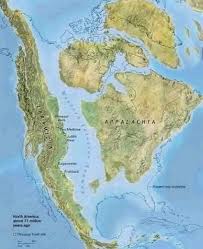
Western Interior Seaway. Around 77 Million years ago, sea levels were much higher than today and the center portion of North America was under water. It was this period that left the sedimentary deposits which would later become the layers of the Grand Canyon.
Week 4 Jan. 26, 2026
Learning Objectives for the week
- Zircons revisited. How these crystals contain radioactive isotopes and help us understand when certain igneous rocks formed.
- Plate tectonics. This topic was the focus of the video Earth, the Inside Story. (available on Amazon Prime Video)
New Assignments this week.
-
- zircon coloring activity
- oxidation of alum and preciptiation of copper
- Video: BBC: Ancient Earth: Birth of the Sky (season one, episode 1). Students were to take notes on this ilm.
On Monday, students worked on this worksheet: zircon coloring activity.
On Tuesday, we did a chemistry lab which introduces students to oxidation and reduction reactions in chemistry. In this lab, we first made a solution of Copper Sulfate and then immersed sheets of aluminum foil which rapidly dissolved releasing huge amounts of heat. Along the way, the blue color of the copper solution turned clear as the copper precipitated out of solution.
On Thursday, we examined the filtrate containing various oxides of copper and then watched this short video:: Earth, the Inside Story.
Week 5 Feb. 02, 2026
Learning Objectives for the week
- Continuation with chemistry of minerals
- Learning symbols of elements
- Poly atomic ions including Carbonates, phosphates and sulfates
- Percent Mass calculations.
New Assignments this week.
On Monday, we discussed percent mass. On Tuesday and Thursday, we worked on the Percent Mass assignment considering various materials in front of us (bone, crystals, shells, etc.) and determined what the percent mass (and therefor the mass of). of Oxygen in each item. Along the way, we considered various elements, polyatomic ions and different minerals that living creatures have incorporated into their body matrix.
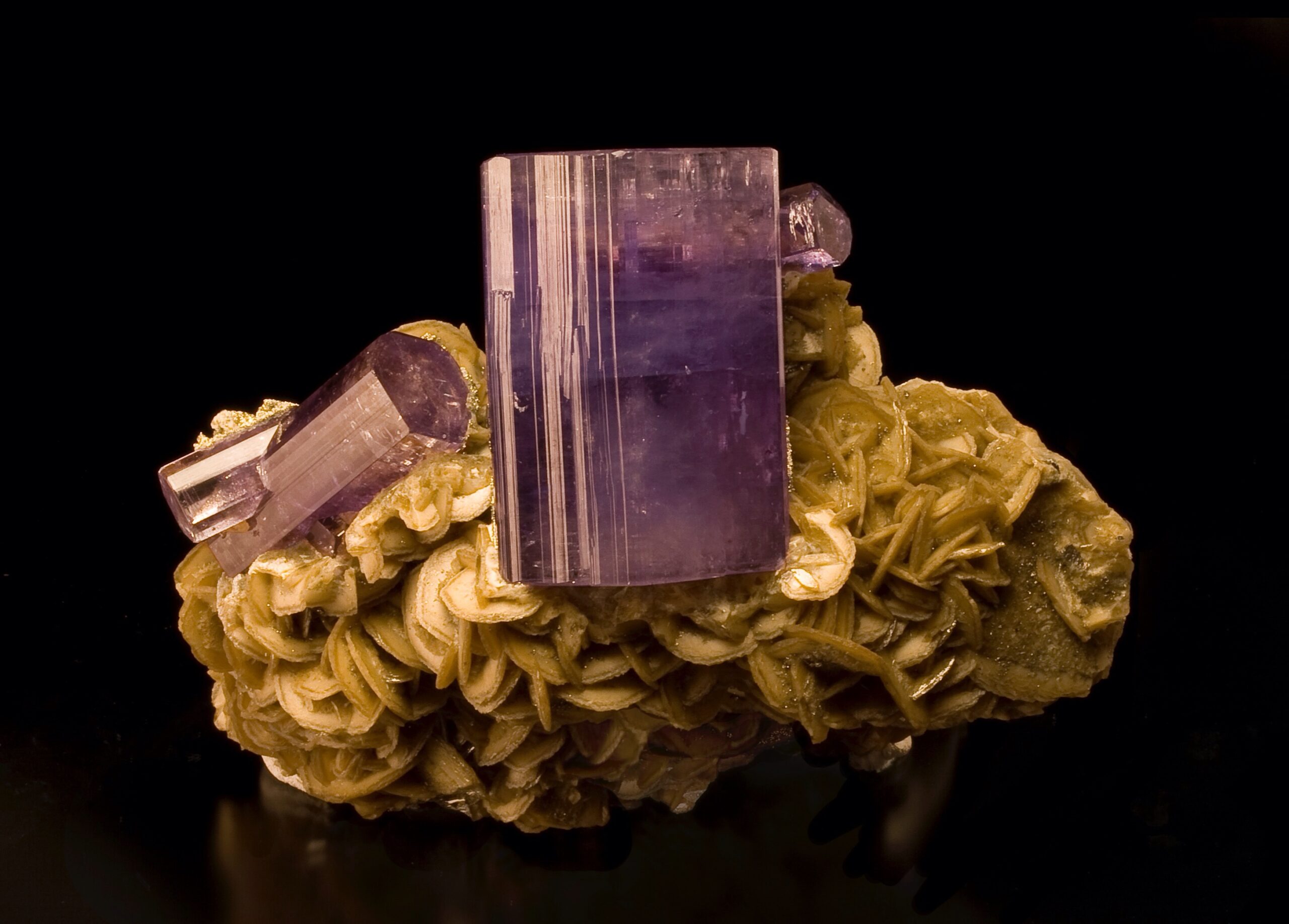
Bones are a mixture of minerals and collogen. The mineral is called Calcium Hydroxylapatite.
Week 6 Feb. 09, 2026
Learning Objectives for the week
New Assignments this week.
We began on Monday by simply finishing up the documentary from two weeks ago *The Birth of the Atmosphere” picking up where we left off, with the appearance of Oxygen in the Earth’s atmosphere. Clark emphasized that prior to this event (The Great Oxidation Event). all of Earth’s Oxygen was tied up in either rocks (Silicate minerals) or water.. once it was released however, it began to react with nearly everything.. the highlight of the film was the reaction with all of the dissolved metals in the oceans and the new appearance of acids such as carbonic Acids which began to accelerate weathering of the continents.
- Tuesday we returned to the concept of Geologic Time and the Stratigraphic Record.
- Relative Dating of rock Layers
- Trilobites
Bones are a mixture of minerals and collogen. The mineral is called Calcium Hydroxylapatite.
Week 7 Feb. 16, 2026 Ski Week! Ski Week!
Learning Objectives for the week
New Assignments this week.
Week 8 Feb. 23, 2026
Learning Objectives for the week
- What is the meaning of the Ice Ages? What are ‘interglacial periods’ and glacial periods.
- When did our current, inter-glacial period start? How long was the last Glacial Period?
- How are CO2 and Earth’s temperature related?
- If we hadn’t put so much CO2 into the atmosphere in the last 200 years what ‘should’ Earth’s current temperature trajectory be?
New Assignments this week.
- Video: Chasing Ice. (notes required from film and Clark’s additions).
This week Clark began by discussing Earth’s climate and highlighting how CO2 in the atmosphere is directly associated with Earth’s temperature. The record of Earth’s “hottest year on record’ was discussed as well as the ocean chemistry which allows the Earth’s ocean’s to absorb the atmospheric CO2 and from it, create Limestone. This in fact, is how Earth cools down after massive injections of CO2 due to Volcanic Events. From this point, we then watched Chasing Ice to reflect on Earth’s shrinking glaciers as well as the Ice-Core data and what it reveals about Earth’s historical temperature and CO2 levels.
Week 9 March 02, 2026
Learning Objectives for the week
New Assignments this week.
Week 10 March 09, 2026
Learning Objectives for the week
- Laws of Thermodynamics.
- Thermal Equilibrium
- Specific Heat Capacity and how it differs from one substance to another.
- The specific heat equation and how to use it.
New Assignments this week.
- Lab: Determining the Specific Heat value for Lead.
- video: Ancient Earth. (notes for EC)
On Monday and Tuesday, Clark discussed how different materials absorb and carry heat. The flow of Heat from the interior of the planet is due to Convection of molten mantel material towards the surface. The Rules of Thermodynamics were introduced in that a) all substances want to be at the same temperature (and heat transfer will take place until they are) and b) that different materials respond to heat in different ways. The concept of Specific Heat Capacity was introduced as we engaged in a lab in which students took hot balls of metal (lead) and immersed them into cups of cold water. Based on the system reaching Thermal Equalibrium, we calculated how much energy per gram was required to cool the metal.
Video: Ancient Earth. This video explores how dramatically Earth’s climate has changed. The story begins with cave paintings which date back ~ 40,000 years and considers that at the time, the Earth was still deep into the last glacial period. The film then considers the meteor impact which wiped out the dinosaurs and how the material thrown up into the air upon impact led to global cooling for years. Students took notes for extra credit.
Week 11 March 16, 2026
Learning Objectives for the week
- Polar Vortex
- Using estimation to measure Meters
- Creating a position vs time graph
- Measuring Slope of the position graph to determine velocity
New Assignments this week.
- Big Step Estimation
- Three-legged race (and graph of position vs time and then velocity vs time from this data set)
On Monday, Mr. Clark introduced the concept of the Big Step as a way to measure off distances in Meters. This is a much more convenient way to measure large distances then carrying around Meter Sticks. On Tuesday, we went outside as a class and divided up into groups to engage in a friendly three-legged race. (details to come). Along the way, ‘markers’ dropped off tennis balls indicating where the group was every three seconds. From this data, we created charts showing the absolute position of each group as a function of time. From here, we used Google Sheets to graph the data.
Week 12 March 23, 2026
Learning Objectives for the week
- Formation of stars from the Big Bang to our modern Sun. (discussion centered on the video: Nova, Universe Revealed).
New Assignments this week.
This week picks up on last week’s discussion of graphing position as a function of time. This week however, introduced students to the Pasco Smart Cars. These cars have on-board sensors which record position, forces, accelerations, etc. which are then communicated to app’s on student cell phones or chromebooks to see data in real time. The first objective was to simply download and become familiarized with the SparkVue app.. and then to use Google Sheets to plot velocity vs time for the car. Students were to ‘annotate’ their graphs describing what was happening in time. Later in the week students attempted to capture the data from two cars (on one device).. and write their first functions in Google Sheets to a) flip the data (for the car going backwards) and b) Create a momentum graph for both cars showing how the Sum must be constant.
Week 13 March 30, 2026
Learning Objectives for the week
New Assignments this week.
- Physics Text Reading/problems: Momentum and impulse
- (pgs 229-232 + probs on 233)
Week 14 April 06, 2026 Spring Break! Spring Break!
Week 15 April 13, 2026
Learning Objectives for the week
New Assignments this week.
Week 16 April 20, 2026
Learning Objectives for the week
- The physics of reentry from space
New Assignments this week.
- The 4 minutes that will decide if Artemis !! Astronauts will survive. . One page of Notes!
- Electric Field Hockey
- snap circuits lab 1: Series and parallel circuits
The week began with Clark discussing Electric Fields including how we imagine them, how we draw them and how we measure them. Along the way we discussed how we measure charge (Coulombs) and the effect of an electric field on charged particles. What is Coulombs Law? Next we returned to electric circuits including watching this video which illustrates charge moving around a circuit and Ohm’s law.
Tuesday we explored how to use Multi-meters including how to measure current in a circuit and how to measure the resistance of a circuit element. We also tried a few Ohm’s Law problem with resistors in series and in parallel.
Week 17 April 27, 2026
Learning Objectives for the week
- How is charge measured? what is a Coulomb?
- What is Ohms Law and how do we use it in calculations of electric current?
- What is an Electric field? How is it measured?
Notes from lecture/discussion
New Assignments this week.
- practice circuit problems
- project 252_capacitors to store electricity
- project 296_capactitors to quiet a motor
The week began with Clark discussing Electric Fields including how we imagine them, how we draw them and how we measure them. Along the way we discussed how we measure charge (Coulombs) and the effect of an electric field on charged particles. What is Coulombs Law? Next we returned to electric circuits including watching this video which illustrates charge moving around a circuit and Ohm’s law.
Tuesday we explored how to use Multi-meters including how to measure current in a circuit and how to measure the resistance of a circuit element. We also tried a few Ohm’s Law problem with resistors in series and in parallel.
Next up was Capacitors.
Week 18 May 04, 2026
Learning Objectives for the week
Notes from lecture/discussion
New Assignments this week.
Week 19 May 11, 2026
Learning Objectives for the week
- Wave speed formula
- Reflection and intereference
- Resonance.
Notes from lecture/discussion
New Assignments this week.