
Welcome to AP Physics SPRING SEMESTER!
Click here to jump to current week.
Week 1: Jan 06, 2026
Learning objectives:
- Review last semester’s Final Exam
- Introduction to Rotational Dynamics beginning with the symbols used and rotational kinematic equations.
New Assignments:
- HW Set: Problems 1, 5, 7, 18 and 19 on page 275 of OPEN Stax text book. &.. attach EITHER notes you took in class from the introduction to rotational dynamics OR text notes from chpter 6.1.
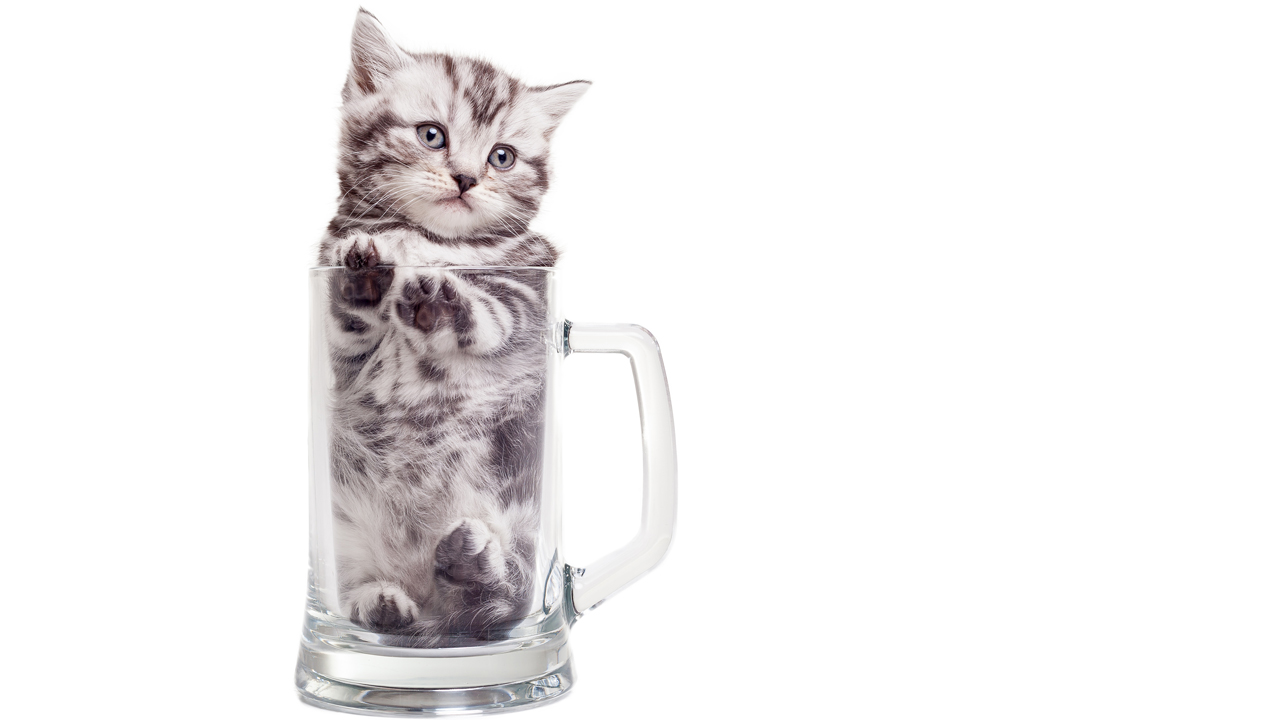
- Rheology-of-cats
- Determination of Max Omega! This lab had students sitting on the “Sit and Spin” chair and simply measuring the maximum rotational velocity in RPM and Rad/sec. Max Omega_an introduction to rotational kinematics
Clark was out on Wednesday, but left an interesting article titled: The Rheology of Cats. This article both introduced the field of Solids vs Liquids, but also the entertaining competition in science of the IgNobel Prizes.
On Friday, we started class be first reviewing the article (and the true history of the Nobel Prize) and then began reviewing the problems from the previous semester’s Final Exam (we got through the first three on Friday).
We then stepped into the next AP Unit (6: Rotational Dynamics) The opening discussion was focused on the symbols used in Rotational Dynamics (defined in chapters 10.1 and 10.2 of the OpenStax text book. Of special interest was the comparison between linear kinematic equations an rotational kinematic equations (illustrated in on page 425).
(note to Clark: Upload UNIT At a Glance handout with corresponding OpenStax chapters.)
Week 2: Jan 13, 2026
New Assignments:
-
- Feel the Torque! This lab had students placing weights at various points on a meter stick and then holding the stick at predefined angles in order to calculate and feel the torque. (note to Clark, we used binder and paper clips to suspend soda cans filled with water as the ‘load’).
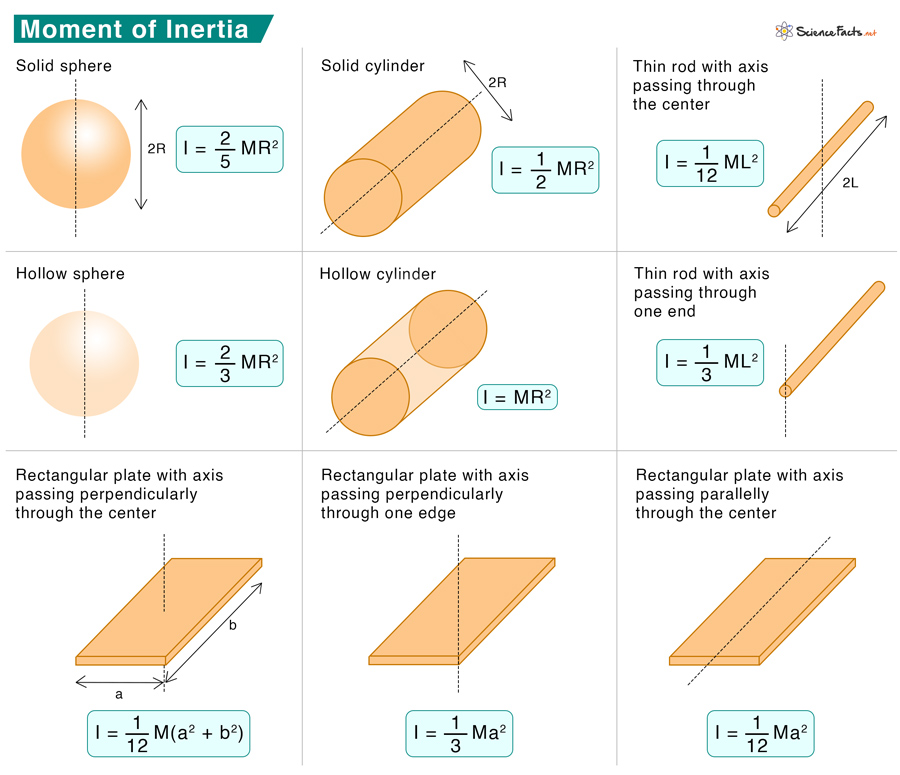
- Feel the Moment (of Inertia). Students considered the acceleration of an ordinary hammer about three different axis. For each axis, students were to consider the hammer (the handle and the ‘head’) as the Sum of geometric objects, each with its own, Moment of Inertia. The students are to both draw the shapes individually, and showing what the equation of Moment of Inertia is for each, and then show how the total Moment of Inertia is the ‘sum of the parts’.
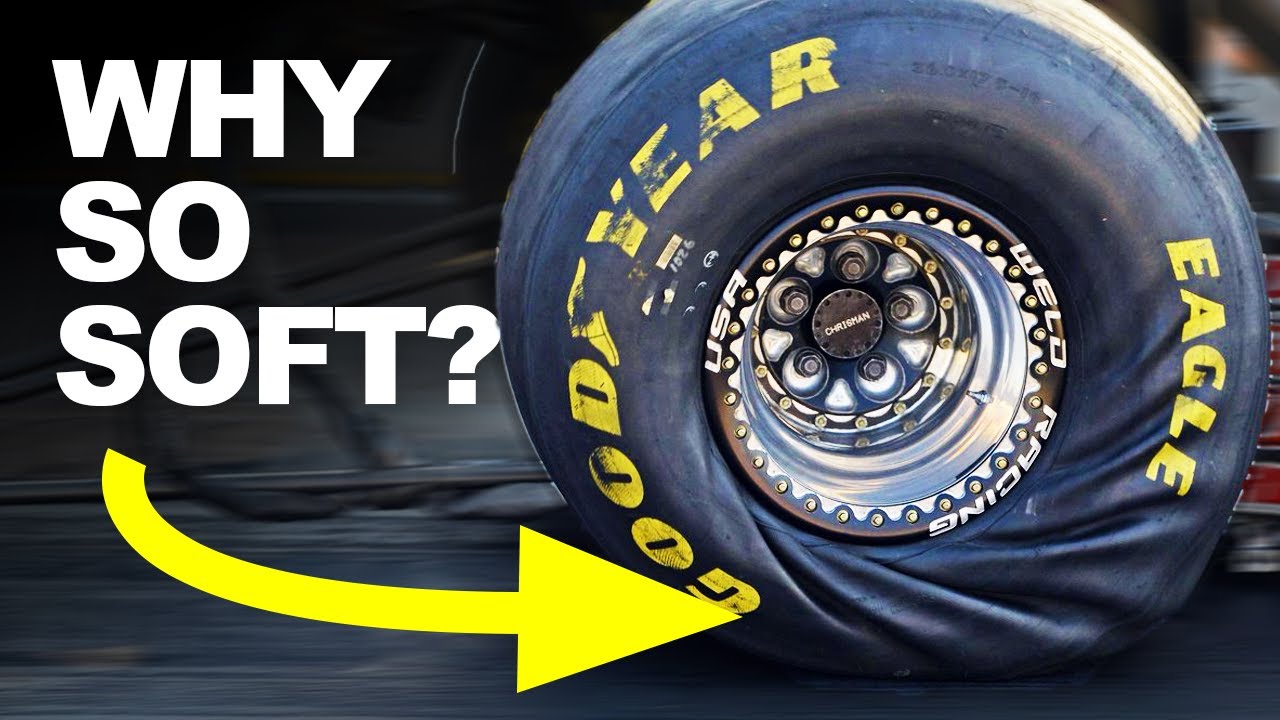
The opening discussion was focused on the symbols used in Rotational Dynamics (defined in chapters 10.1 and 10.2 of the OpenStax text book. Of special interest was the comparison between linear kinematic equations an rotational kinematic equations (illustrated in on page 425). On the second day, we delved into Torque as a topic (described in chapter 9.2 in the text) first introducing the concept of a force being applied at a distance away from an axis of rotation, then doing a mini-lab “Feel the Torque” and finally walking over to the autoshop.. so students could use a Torque wrench to tighten a lug nut on an old truck to a pre-defined Torque specification. (we also watched some youtube clips of wheel standing drag racers)

Week 3: Jan 19, 2026
Learning objectives:
- Problem solving with rotational Inertia
- Kinetic Energy of rotating systems.
New Assignments:
- Homework set 2: Rotational Inertia probs.(please assemble into one packet)
- Reading/Text notes: Chpt. 10.3 Rotational Inertia
- Reading/Text notes: Chpt. 10.4 Rotational Kinetic Energy
- Problems 3, 7, 11, 13, 15
- Modeling Moment of Inertia and determining rotational kinetic energy.
Monday was a holiday: MLK day.
Wednesday students got caught up on last week’s lab and started this week’s homework set. On Friday, we began rotational Kinetic Energy (similar to linear kinetic energy) and had our first Rotational Dynamics lab.. This lab had students wrapping a chord around a pully system attached to a flat ‘plate’ By recording the applied force and then, through transformations determining how much work was put into the system as the students pulled on the chord, we were able to compare to our predictions of rotational kinetic energy (which is based on the measured rotational velocity and our ‘determination’ of the Moment of Inertia for our system).
Week 4: Jan. 26, 2026
Learning objectives:
- Rotational Inertia as ‘the sum of the parts’
- Determining I through experimentation.
New Assignments:
This week was focused on writing the experiment from last week and comparing how the ‘modeled’ Rotational Inertia (based on Tables and forumulae) compared to the value generated by the actual system. (explained in the associated document).
Week 5: Feb. 02, 2026
Learning objectives:
- Introduction to Angular Momentum
- Conservation of Angular Momentum
- Using Vectors to understand and predict Angular dynamics
New Assignments:
- Text book write up: Why a spinning wheel won’t fall.
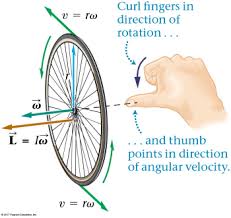
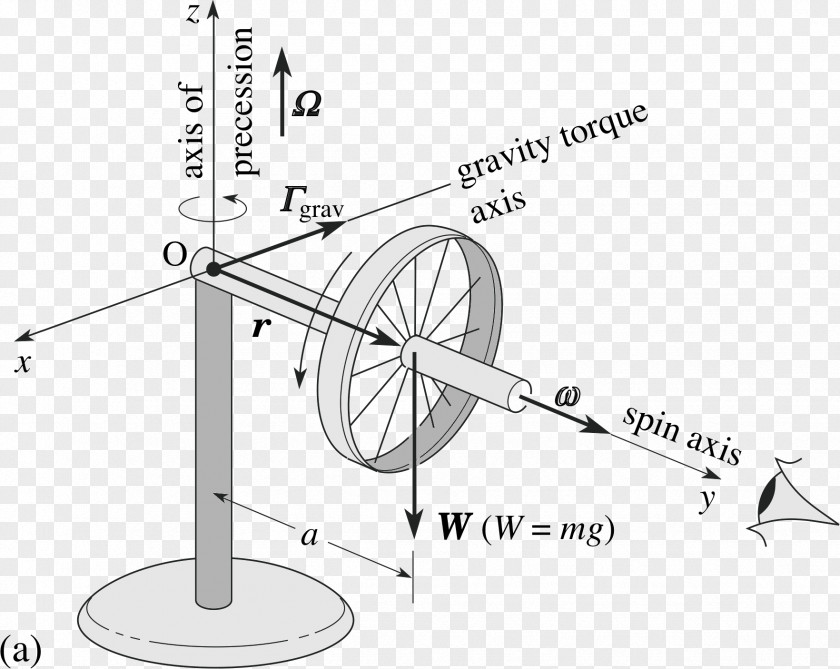
Monday and Wednesday were ‘work days’ for students to finish up their previous labs and experiments. Friday introduced students to Vectors used in Rotational Dynamics (the Right Hand Rule). Two situations were explored; the first being Clark standing on the ‘spin platform’ but initially NOT moving while holding a rotating wheel with the axis ‘straight up’. Mr. Clark then flipped the wheel upside down which led to Mr. Clark spinning. (the ensuing discussion of a closed system maintaining constant Angular Momentum). In Mr. Clark’s next demo, he held the bike wheel rotating in the vertical plane (with one handle being suspended by a chord). When released the bike wheel does NOT fall but instead, precesses around the point of suspension. Students were challenged to take this lecture and ‘give it back to Clark’ as if it were a section from the Text book.
Week 6: Feb. 09, 2026
Learning objectives:
- Introduction to Angular Momentum
- Conservation of Angular Momentum
- Using Vectors to understand and predict Angular dynamics
New Assignments:
- Text book write up: Why a spinning wheel won’t fall.
Monday and Wednesday were ‘work days’ for students to finish up their previous labs and experiments. Friday introduced students to Vectors used in Rotational Dynamics (the Right Hand Rule). Two situations were explored; the first being Clark standing on the ‘spin platform’ but initially NOT moving while holding a rotating wheel with the axis ‘straight up’. Mr. Clark then flipped the wheel upside down which led to Mr. Clark spinning. (the ensuing discussion of a closed system maintaining constant Angular Momentum). In Mr. Clark’s next demo, he held the bike wheel rotating in the vertical plane (with one handle being suspended by a chord). When released the bike wheel does NOT fall but instead, precesses around the point of suspension. Students were challenged to take this lecture and ‘give it back to Clark’ as if it were a section from the Text book.
- This Wikipedia page describes in detail, the torques which lead to precession.
Week 7: Feb. 16, 2026 SKI WEEK! SKI WEEK!
Week 8: Feb. 23, 2026
Learning objectives:
- This week was review for the Unit Test for the First Marking Period.
New Assignments:
- Text book problems from Chapter 10 Rotational Dynamics (page 462).
- 20, 22, 27, 32, 39.
- Solutions to Chpt 10 probs 20.22.27.32.39
Monday Clark reviewed the Practice Ap test that students took before break. These questions were all from the UNIT 7 test bank, Rotational Kinetic Energy and Momentum. Wednesday students worked in groups looking at the Free Free Response Questions from Unit 6 and 7 (Unit 6 is Rotational Kinematics).
Friday is the Unit Test for the marking period grade.
Week 9: March 02, 2026
Learning objectives:
- Simple Harmonic Motion
- Restoring forces
- Period and frequency
- Simply pendulum and mass/spring systems.
New Assignments:
Monday Clark introduced the basics of Simple Harmonic Motion and the idea that many systems will have a ‘natural’ frequency which is ‘fixed’ for the system. Each system has a defined number of parameters that determine this natural frequency (or Period).. and the first order of business is to determine what factors affect the period of oscillation for a simple pendulum. (we too masses and lengths of string out side to enjoy the nice weather!).
On Friday, we stepped into the mass and spring systems with cars set up on ramps and then set into oscillations.. The handout describes the major investigations that students are to explore.

A pendulum clock is a clock that uses a pendulum, a swinging weight, as its timekeeping element.
Week 10: March 09, 2026
Learning objectives:
- Factors that determine frequency and period of a pendulum and of a simple spring-mass system.
New Assignments:
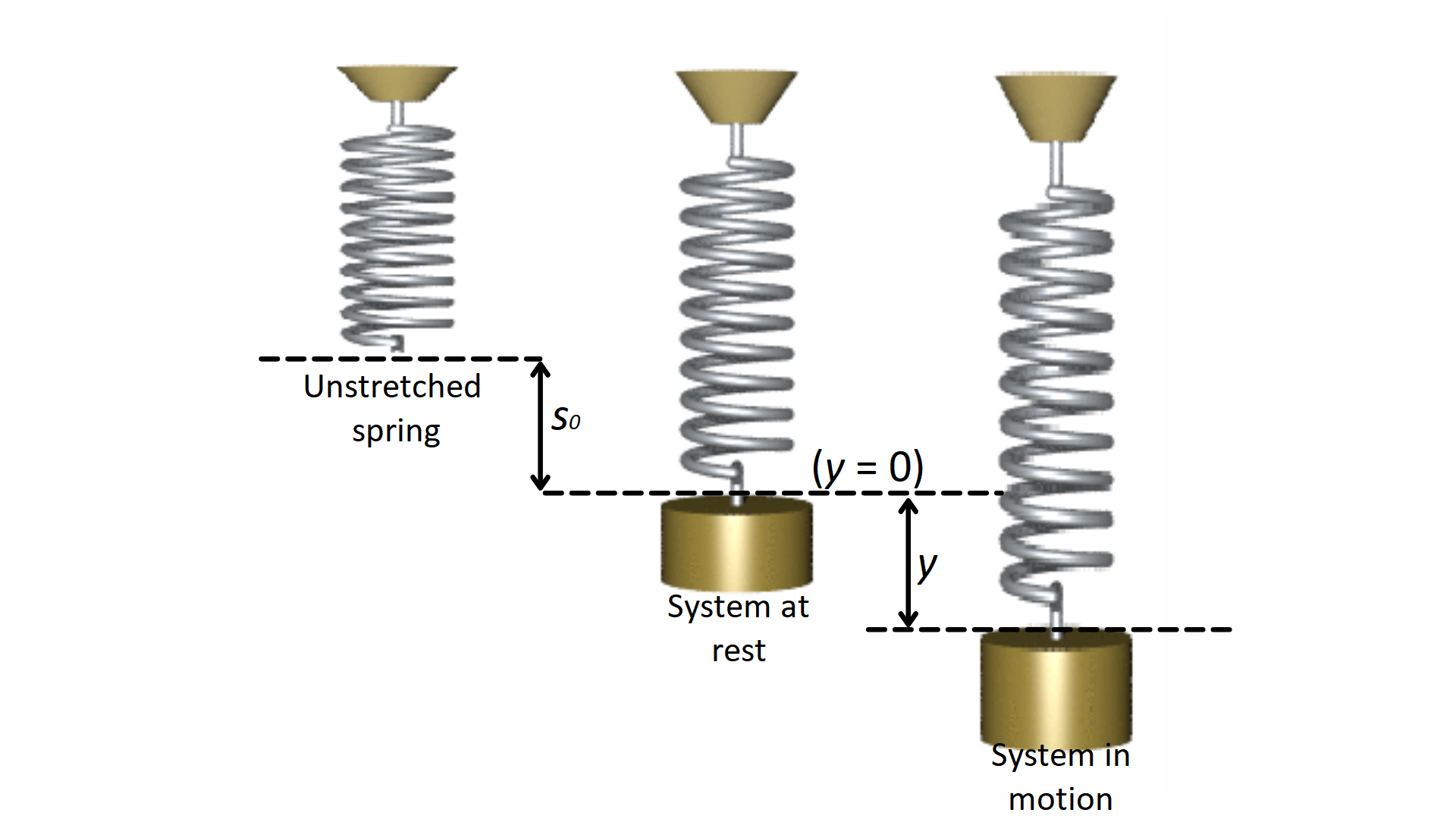
This week was centered on collecting data for the Oscillating System lab. In this lab, students set up the aluminum ramps at an angle (45 degrees or so).. and suspended our familiar Smart Carts on Springs fixed at the upper end. Once the system was set into motion (oscillating up and down).. students used the on-board sensors to collect position data and force data to determine a) the spring constant b) the period of oscillation c) the kinetic and gravitational and stored spring energy of the system. In order to show that energy was conserved there were a number of transformations which need to be written as well as functions to calculate said energies.
Week 11: March 16, 2026
Learning objectives:
- Introduction to Fluids.
- Laminar Flow
- Turbulent Flow
- Vortex formation
New Assignments:
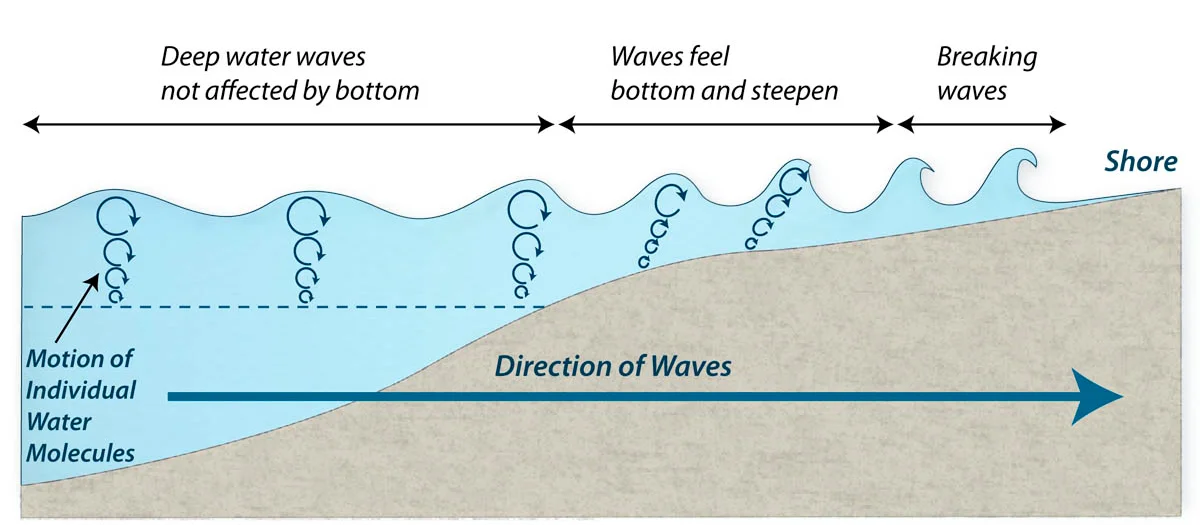
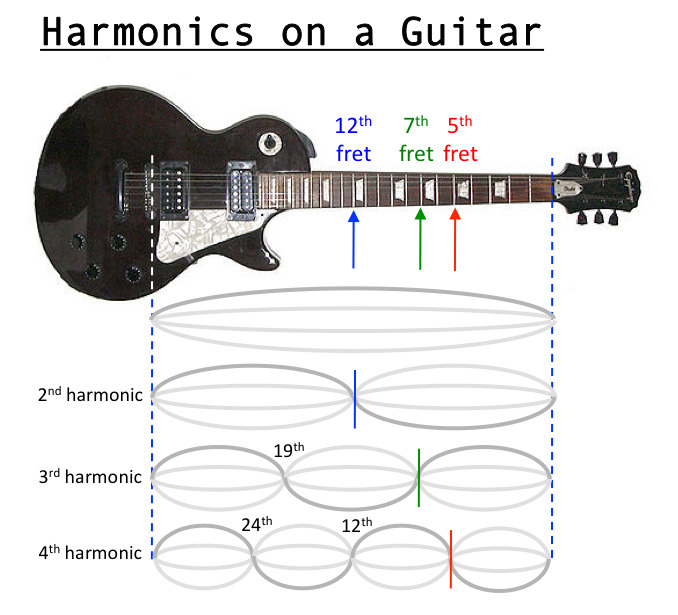
On Monday, we connected the conversation of simply systems that oscillate (pendula and mass/spring systems) to systems of particles tied together.. and how wave propagation through a substance is based on the same principals as simple oscillators. First Clark showed how two simple pendula connected ‘loosely’ by a string will ‘trade’ the oscillations back and forth. this was due to the fact that the two pendula had equal masses and string lengths.. (so therefore the same natural frequency of oscillation). From here Clark brought up the Phet Simulator: Waves on a String.. to show how wave speed, much like period, is FIXED for a given system. To change the speed you must change the system. This led us into our Slinky lab:. (see handout at left).
Week 12: March 22, 2026
Learning objectives:
- Harmonic wave forms within a system.
- Systems closed at both ends vs systems open at one end.
New Assignments:
Clark was out on Monday. Students used the period to play with the on-line PHET simulation for waves on a string. (see assignment at left). On Wednesday, Clark brought a box of tuning forks and associated hardware to create resonance in cylinders of air. With this set up (a polycarbonate cylinder which can be raised or lowered into a container of water) students were able to infer the waveform which must be resonating as well as the speed of sound on this date (usually accepted to be around 240 m/sec). Friday students worked on the practice AP test for Oscillating systems.
Week 13: March. 30, 2026
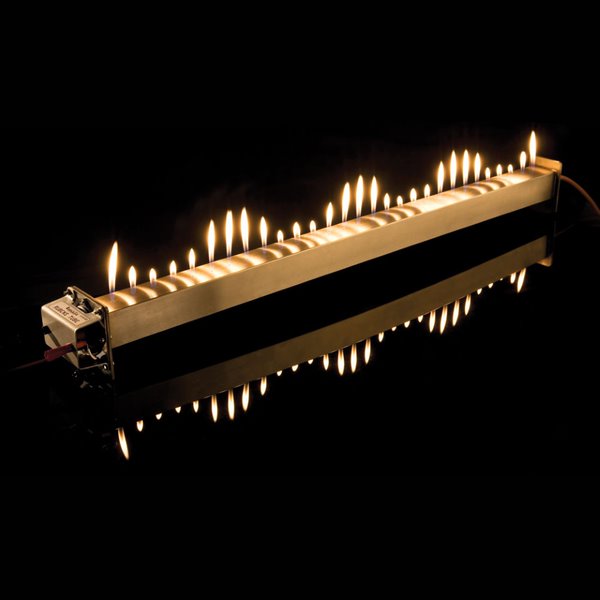
- Considering how wave harmonics can exist in air (sound).. and using fixed frequency tuning forks to determine the speed of sound
- Predicting wave forms in a cylinder ‘open at one end’
- Introduction to music as a function of wavelength and harmonic number.
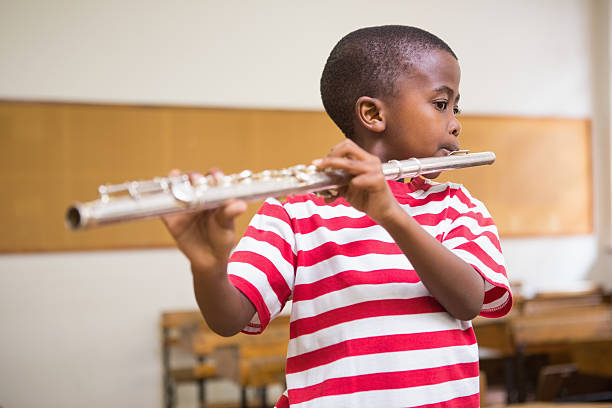
This week began with an transition from systems ‘fixed at both ends’ to systems ‘open at one end’ (sound waves in tubes) and an exploration of the harmonic sequence of wave forms. As part of this we used ‘variable length’ cylinder of air to determine the speed of sound (based on the resonance of sound waves for a given, fixed frequency tuning fork). And then considered the human voice (vocal chords, fixed at each end) and the myriad harmonics that give us our unique sounds..
On Wednesday, we did the pop bottle physics lab with students having fun creating major scales with coke bottles. On Friday, we learned a bit about the history of airplanes and specifically the engineering required to allow planes to fly faster than the speed of sound. Planes of interest include WWI Bi/Tri planes (limited to around 100 mph), WWII Fighter planes (such as the P51 Mustang) and then we jumped into the Bell X-1 plane, the first plane to Break the Sound Barrier.
Of special interest:
Week 14: April 06, 2026 SPRING BREAK! Yay!
Week 15: April 13, 2026
Learning Objectives.
- Fluid Statics vs Fluid Dynamics
- Pressure, density, Archimedes principals.
- Unit-8-AP-Physics-1.
New Assignments
- Minilab_buoyant force
- Text book problems: Chapter 11, pages 513-519
- 5, 9, 11, 15, 18, 25, 32, 24, 37, 51.
- chpt 11 probs and solutions
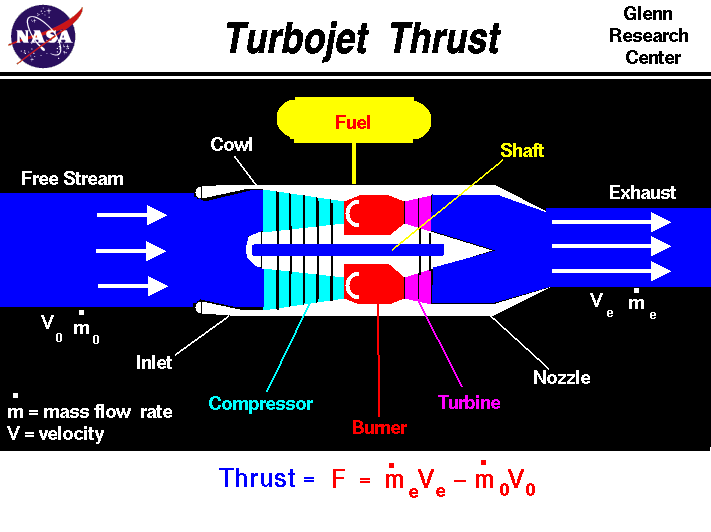
This week began with an overview of fluids and the fact that as a school, we don’t have much equipment to play with. That being said, it is Clark’s goal to do a series of hands on labs exploring several of the ‘laws’ of fluids. As an introduction, we watched this short video describing several ‘labs’ we might be able to do. Also, Clark passed out the AP Topics packet for students to review. (see file at left).
On Friday, Clark walked through one of the AP FRQ,s, (two masses are stacked with the lower one connected to a spring.. given the masses, the coefficient of friction and the Spring Constant, K, determine the maximum amplitude the system can oscillate at without the top mass sliding off. Very interesting set of ideas. We then stepped into a buoyancy mini lab in which students immersed lead weights into beakers of water to compare suspended weight, buoyant force and the changing force on the scale. (see handout at left). We then took a look at this interesting video introducing Bernoulli’s Equations
STOP! Stop! Stop! Everything below is from last year.. assignments and dates may change.
Week 4: Jan. 27, 2025 LAST YEAR! GO BACK UP!
- Podcast: The Science of Friction. Students were to take a page of notes, highlighting the factors that affect friction, how we measure it, etc.
- On-line Practice Ap Test. Students should see how well they do in this test and we’ll discuss next week. (note: The students need to log into the AP Classroom website to take the test. They MAY work together to discuss).
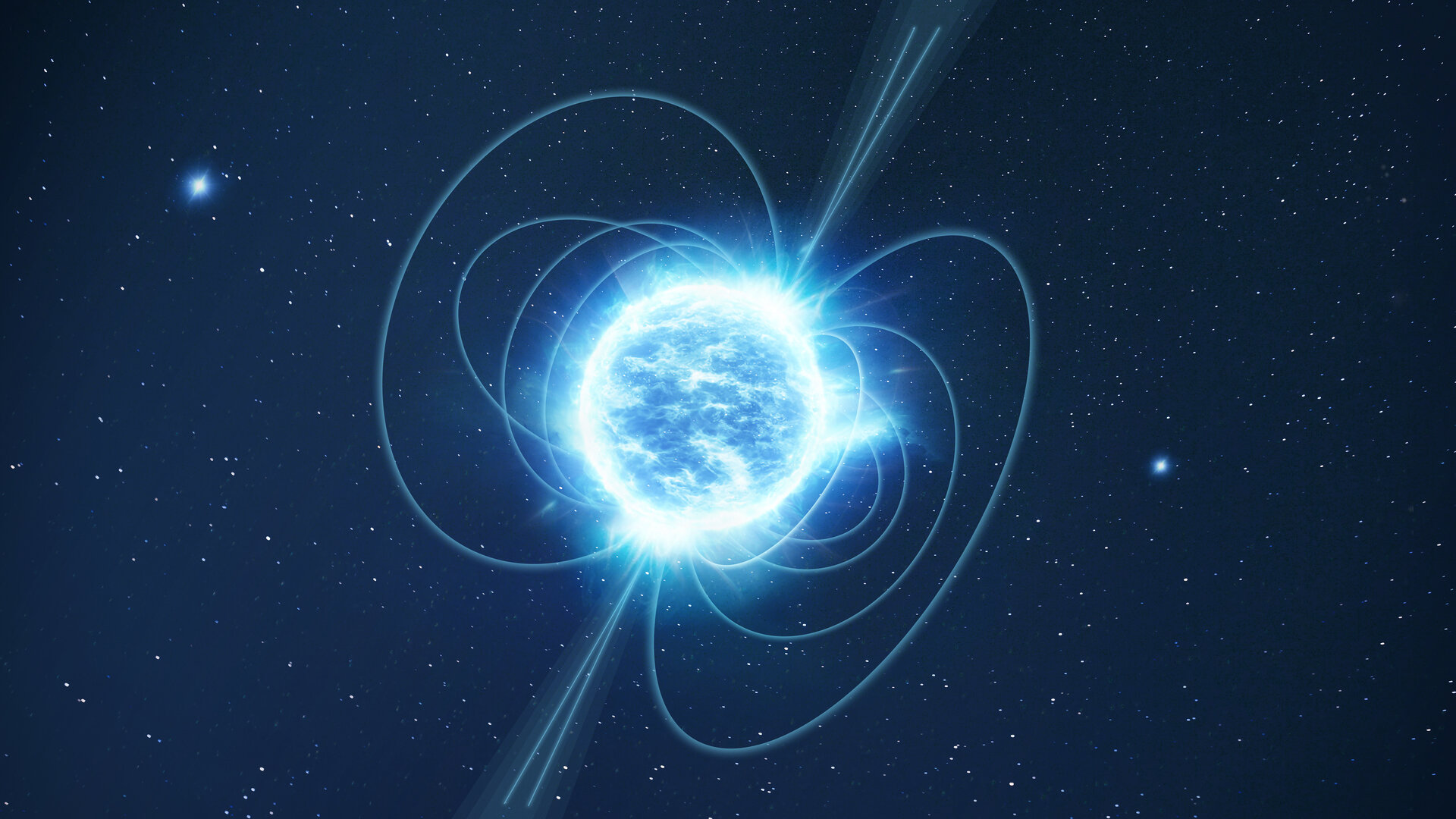
As an exciting example of the Universe at Work.. we explored the world of Pulsars, Neutron Stars and Magnetars and how Conservation fo Angular Momentum is conserved and leads to objects which spin at hundreds of times per second, but contain the mass of hundreds of Suns
With that in mind, the concept of Angular momentum and the conservation thereof, was introduced. For demonstration, Clark brought out a rotating platform/stool, and demonstrated how holding a spinning bike-wheel in different orientations resulted in the ‘system as a whole’ responding. Also, introduced, was the concept of using vectors to represent roational values (omega as the rotational velocity and L as the momentum vector.. L = I omega).
On Thursday, we stepped into the demonstration of the wheel being spun up and then being suspended by the end of axel rod. Clark then walked through the vector physics predicting the observed motion centered on the idea that ‘if you can see the direction of the forces/torque, you can also see the direction fo the change in velocity/omega). Students were tasked with taking notes during the lecture and then rewriting them such that they look like a college text book section on the matter.
Week 12: March. 24, 2025
- Wave speed is ‘fixed’ (for a given substance)
- Waves can pass through each other without interacting
- Waves can ‘interfere’ with each other in the substance
- Waves can reflect
- Introduction to harmonics (the series of frequencies and wave forms which can exist in a system).
New Assignments:
- slinky waves_spring 25
- Waves on a string simulator. (student handout: waves on a string)
Friday students spent time on the practice AP test for oscillations.
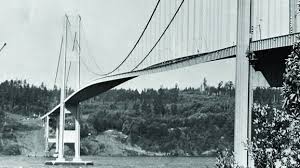
Student Project showing Computational Fluid Dynamics of Vortex shedding.
Of special Interest: This video explores the latest, state-of-the-art machines doing Laser Photolithography to manufacture semiconductors.
Week 14: April 07, 2025 Ski Week!
Week 15: April 14, 2025
- Introduction to Pressure.
- Triple point of water.
- The formation of ‘shock waves’ as aircraft reach the speed of sound
- Buoyancy
- Buoyancy lab. Students were given a wooden dowel and then tasked with first determining the density of the piece, then based on principals of buoyancy the students were to determine what fraction of the dowel would remain above water (note: meaning how many cm would remain above water). Students did this math individually including a drawing the system, all measured values and math along the way. (percent error too!). For Extra Credit, students also determined the uncertainty in the measurements and the percent uncertainty in their final value).
- (note: concrete canoes are a standard engineering project at university)
- FRQ: 1 + 2 from Unit 7: Oscillations. (students were to download the on-line Blue Book and use the secure web browser for this test today)
A quick demonstration was done after bringing up the Digital Dutch webpage showing that 1 Atm. = 14.6 lbs/square inch. What does this mean? After filling up an Erlymeyer flask with water, and noting that the opening is roughly 2.5 square inches… means that the total force on the opening is roughly 38 lbs of force total. Clark then turned the flask upside down with nothing more than a piece of cardstock to close it up.
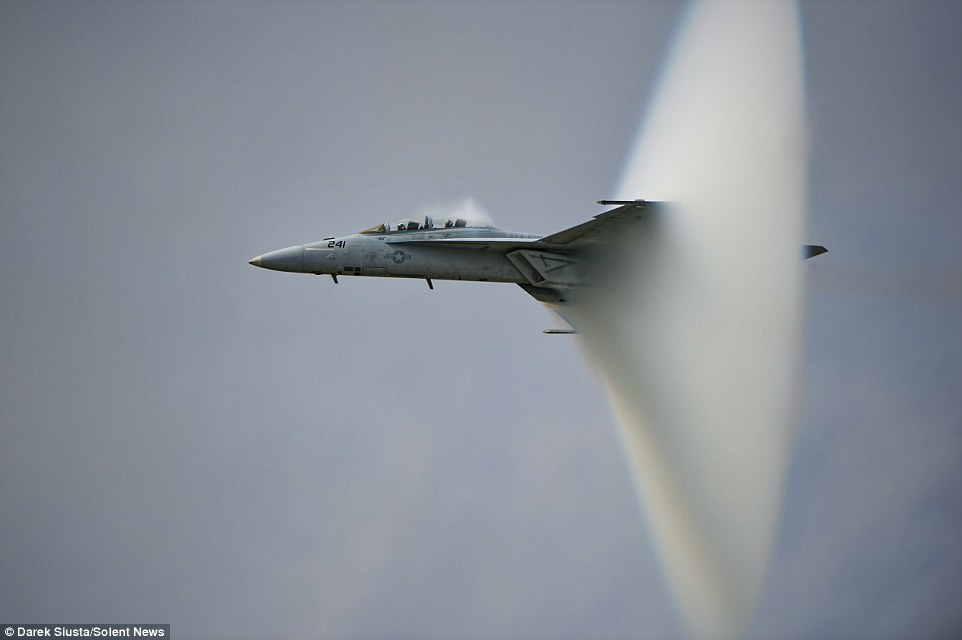
The triple point of water was introduced to illustrate the effects of different pressures on the state of water. Doppler effect and shock waves..
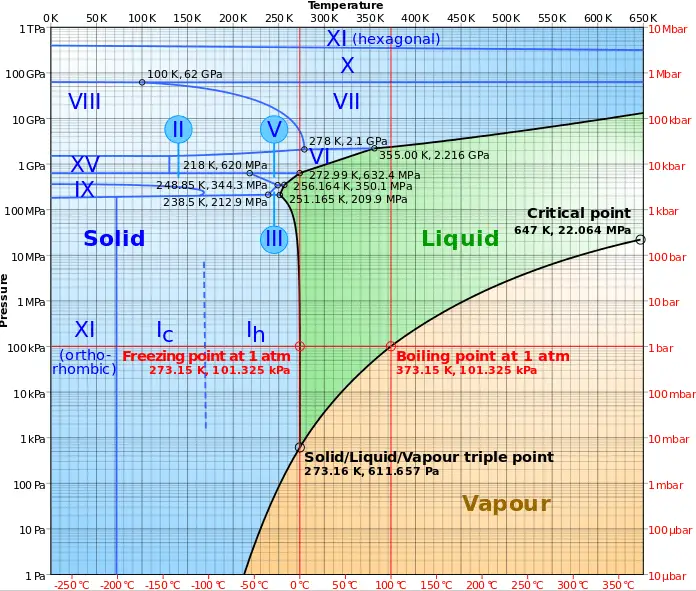
This then was seen first hand when a fighter jet passes by spectators during SF Fleet Week.
Week 16: April 21, 2025
- Introduction to fluids in motion (fluid dynamics) and comparisons between Fluid Statics and Fluid Dynamics.
- Bernoulli’s Equations:
- (note: concrete canoes are a standard engineering project at university)
- FRQ: 1 + 2 from Unit 7: Oscillations. (students were to download the on-line Blue Book and use the secure web browser for this test today)
Week 17: April 28, 2025
- Bernoulli’s equations (for fluid dynamics.. i.e., fluids in motion)
New Assignments:
- Chpt 11 problems: 5, 10, 11, 12, 25. (page 514 of text). (solutions to chpt 11 hw set (5, 10, 11, 12, 25)
- Video: Breaking the sound barrier. Students were to take a page of notes.
- Students took the AP Classroom, practice AP Test for Fluids today (both multiple choice and FRQ’s)
Video: Breaking the sound barrier. This Modern Marvels documentary describes the engineering challenges of trying to create a plane that could fly faster than sound and more importantly, be controllable. Chuck Yeager emerges as the hero of the day. Students were to take a page of notes.
Discussion: Bernoulli’s’ equations for fluids in motion. First we watched this video which is a great introduction to Bernoulli’s principals.
Week 18: May 05, 2025
AP Testing: No New Assignments.
Week 19: May 12, 2025
AP Testing: No New Assignments.
Week 20: May 19, 2025
Learning Objectives
- Introduction to static charge and voltage
New Assignments:
- Chapter 18 in On-line text book. Static Charge. Students were to take one page of notes summarizing the main ideas around electric charge and the electric field.
- Video:(first 45 minutes): Tesla, Master of Lightning. Students were to take one page of notes highlighting Tesla’s life and his interactions with Thomas Edison.
- Build a circuit (see text at right). Students held on to their circuit diagrams until next class, when we’ll discuss the math around current, resistors and voltage.
Clark was out on Tuesday. Students first reviewed Chapter 18 in their on-line text book, introducing concepts of electric charge and the electric field.
Activity/discussion: Building circuit and measuring voltage around the circuit.. using multi-meters to measure voltage. For each of the two circuits below, students were to measure voltage (noting milivolts when multimeter “autoscaled”) around each branch of the circuit.
- Snapcircuits project 5: motor and light in series
- Snapcircuits project 6: motor and light in parallel.
- For each of these circuits, students are to:
- draw a sketch (circuit diagram based on symbols on components)
- describe in words what the circuit appears to do.
- use the multi-meter to measure voltage around the circuit.
Week 21: May 27, 2025
Learning Objectives
- Introduction to circuits and Ohms Law..
- Resistors in series and parallel..
- Introduction to Capacitors
New Assignments:
- Students took notes on the lecture/discussion of circuits.. (resistors in series and parallel)
- Electronic Lab kits projects 296 and 252 (capacitors used to quiet noise in a circuit and to store energy)
- Clark discussed the basics of Ohms Law and how current flows around a circuit. Fundamentally, batteries ‘lift’ the energy of charge (modeled as positive charge moving from the positive side of the battery around the circuit and back to the negative side of the battery).. One of the goals of circuit design, is to regulate the flow of electricity.. by adding resistors in series, one can reduce the current flow and by adding resistors in parallel, one can increase current flow.
Capacitors as a device to store energy and dampen voltage spikes..
- Video 1: Ohms Law visualized
- Video 2: How a capacitor works in theory:
- Video 3: Fun with Ultra Capacitors.
- For each of these circuits, students are to:
- draw a sketch (circuit diagram based on symbols on components)
- describe in words what the circuit appears to do.